Skip to content

Fathom Practice

When the usual pattern stops working.

Strategy, foresight and sense-making for regulators and the boards that govern them, in Aotearoa New Zealand and Australia.

Most agencies already hold what they need to see it coming. It sits in different places and arrives after the decision. I connect it in time to be used.

  • You find out what your own people already know, while you can still act on it.
  • Your board gets a decision record that holds up when someone comes looking.
  • You stop buying complexity language for problems that are only complicated.

Watch the two minute primer →

I was Chief Advisor Strategy at Maritime New Zealand, where the work was harm prevention across an operating environment that was complex and rarely still, and where the decisions that mattered most were seldom the ones the framework had anticipated. That is the work I do now, wherever it turns up, and much of it goes into building the capability to anticipate and adapt, in the people holding those decisions, and in the system around them.

Wellington, New Zealand. Working across New Zealand and Australia.

Fathom Practice seal: three horizontal soundings above a sounding weight, with the words Fathom Practice, sound judgement in deep water.
  • Thirty years in the New Zealand public sector, ten at Maritime New Zealand, most recently as Chief Advisor.

  • HIFO piloted in Wellington in 2023 with 40 regulators, and in Victoria in 2024 with 24 participants from 15 agencies.

  • Guest faculty at the Australia and New Zealand School of Government (ANZSOG). Published in Policy Quarterly.

One week, one regime, one finding.

Start here.

Sweep is a short diagnostic on a single regime. I work from records you already hold, run one instrument with your team, and leave you a finding your board can read. Fixed price. Sized to sit inside most second-tier delegations.

What you give me
One regime, records you already hold, an hour with the leadership team.
What I do
Run one of five one-page instruments against what the agency already knows.
What you get
A completed register and a short memo, written so it can be released.

If the regime is settled and performing, I will say so.

Book a sounding call

Two minutes

Start with the primer.

What the work is, what kind of situation it is for, and where best practice stops helping. Around eighty per cent of regulatory problems never need any of it. It plays without sound.

Cynefin is the work of Dave Snowden and The Cynefin Co. Sources are named on screen as they appear. Read the transcript
Transcript

A Fathom Practice primer. Reading complexity, and acting in it. What the work is, what kind of situation it is for, and where best practice stops helping. Sound judgement in deep water.

The paper says the regime is performing. The room is not so sure. Somebody says it out loud near the end, and it does not make the minutes.

The first decision. The first regulatory decision is not what to do. It is what kind of situation this actually is. Best practice holds in the shallows and drags in the deep.

Read the water you are in. Clear at 25. Complicated at 50. Aporetic at 100, the fog. Complex at 200. Chaotic at 300.

Not everything is complex. Eighty per cent sits in the ordered water, where good or expert practice belongs. Pareto, as a rule of thumb.

On-screen attribution: Cynefin. Dave Snowden and The Cynefin Co.

What that changes. In ordered conditions you act to solve. In complex conditions you act to learn. Small, bounded, reversible, and chosen for what it teaches.

Who says so. Rob Warner. Nine years as Chief Advisor, Strategy and Foresight, Maritime New Zealand. Thirty years in the sector. Guest faculty, ANZSOG. Published with Dr Grant Pink in Policy Quarterly, and through the ANZSOG National Regulators Community of Practice. Sessions with regulators in New Zealand and Australia.

Capability is what regulators need to do. Craft is how they exercise judgement when the future is uncertain. Pick one regime. Send me three lines about what is not sitting right. Fathom Practice. fathompractice.com.

Sound familiar

You will know some of these.

  • The failure that reached the news before it reached your desk.
  • A harm that falls between two regulators, or two jurisdictions, and into neither.
  • A technology your statute did not imagine.
  • Assurance is green and the room is still uneasy.
  • The same issue keeps returning to the agenda in a different form.
  • A strategy refresh that produced a document nobody opens.

If more than one of those lands, the situation has changed kind while the response has not.

What the work is for

Risk-based methods strain under deep uncertainty.

Risk-based methods work while probabilities can be assigned and the system holds still. Under deep uncertainty they strain. Probabilities become contested, and regulated parties adapt to whatever you do about them.

Agencies usually hold the knowledge they need already. It sits in different places and arrives after the decision. This work connects it in time to be used.

Track record

  • Foresight and regulatory systems sessions for the Victorian Department of Treasury and Finance.

  • Foresight and strategy sessions for Toitū Te Whenua Land Information New Zealand, the Ministry of Education, Maritime New Zealand and MBIE.

  • Sessions and workshops with regulators in New Zealand, Australia and internationally, on my own and with Dr Grant Pink.

  • Trained through The Cynefin Co, Oxford-trained scenario planner, NeuroLeadership-trained coach.

On method

Reading the water you are in

Regulators mostly analyse from above the surface, where the regime can be described and the numbers sit still long enough to be counted. The harder work begins once you accept that you are inside the thing you are assessing, and that your own presence changes what the water does.

Regulators feel this every time an intervention alters the behaviour it was meant to measure. The sense-making I run is built for that second position.

Reflection and reflexivity, drawn as a chart and a sounding.Two panels. On the left, a marked line held above the surface of the water, reading it from outside. On the right, the same line lowered into the water, with the depth contours bending around the point that is doing the measuring.REFLECTIONTHE CHARTI am studying the water.Reflection asks,“How does the water work?”REFLEXIVITYTHE SOUNDING1020I am in the water I am studying.Reflexivity asks,“How is the water shaping what I read?”FATHOM PRACTICE
The distinction between reflection and reflexivity is long established in social research. The reading here is mine.

Services

Three services, three modes.

Down the page are the three services. Across each service are the three modes. You can commission any one on its own, and most engagements begin in one mode and move to another.

The work runs with the front line, with managers, with executive teams and boards, and usually with more than one of them in the same room.

Most engagements start with a workshop. If you are not sure which, start with Sweep above. The primer above shows how the sorting works.

  1. 01

    Workshop

    Half a day to two days. A group in a room, building something they keep.

  2. 02

    Project

    A defined piece of work with an end point, or two to three hours with the people who hold the decision.

  3. 03

    Advisory

    Named support over an agreed period, alongside you on one thing.

HIFO

Hindsight, insight, foresight, oversight

Four questions asked together, so that lessons, live signals and what is forming reach the same table while the decision is still open.

Warner and Pink. Published through ANZSOG, 2023.

Workshop

Most common start

Four Sights review

Operational

Your team runs a live decision through all four sights, and finds which one it has been relying on and which one has gone quiet.

You leave with: A decision record: the choice, the evidence behind it, the assumptions relied on, the review point and the stop rules.

Enquire about this

Project

Horizon session

Strategic

A board or executive team surfaces the factors and actors shaping the next few years, what would be noticed first, and who is watching for it.

Enquire about this

Advisory

Sustained inquiry

StrategicOperational

Sustained work on one issue. How monitoring, intelligence and assurance connect, where signals stall, and what the board should be asking between reports.

Enquire about this

Strategic framing and delivery

Choices made explicit, then tested for coherence

Regulatory strategy is a set of intentional choices made to drive preferred changes in a defined context. The choices have to cohere, or planning, alignment and execution pull apart.

Workshop

Operating environment map

Strategic

Separate what will not move from what can, and pick the moves that are open to you now. Uses Estuarine mapping.

You leave with: An operating environment map.

Enquire about this

Project

Strategy coherence check

StrategicOperational

A draft regulatory strategy, Cabinet paper or licensing change read for the choices it makes, and whether planning and delivery can follow from them.

Enquire about this

Advisory

Outcomes and measures

Operational

Outcome frameworks, measures and reporting built for the decisions they support, and honest about what they cannot tell you.

You leave with: An outcome framework with its measures and reporting.

Enquire about this

Rx, the Regulated Experience

The regime as the regulated party meets it

Sense-making from the outside in, because compliance is decided well away from where the rule was written.

Warner and Pink. Policy Quarterly, volume 21, issue 4, November 2025.

Workshop

Experience mapping

Operational

Trace the regime step by step from the outside in, and find the points that decide compliance.

You leave with: An experience map of the regime, step by step.

Enquire about this

Project

Frontline soundings

Tactical

Structured sense-making with regulated parties and frontline staff, run so people say the thing they would never put in a survey.

Enquire about this

Advisory

Settings and design review

TacticalStrategic

Read the settings against the outcomes intended and the experience intended, so both are designed on purpose and then checked.

Enquire about this

Layer tags read as follows. Tactical, the decision in front of you. Operational, how the regime runs. Strategic, whether the regime still fits. Size, duration and cost are agreed separately, and any piece of work can be scoped up or down.

Not sure which mode? That is usually the first conversation.

Inside HIFO

Four questions asked at the same table.

Lessons sit with assurance, live signals with inspectors and analysts, anticipatory work with strategy, and authority with the executive. Each function performs, and the agency still cannot assemble a decision-ready view.

  1. Hindsight

    What earlier cases, reviews and near misses taught, and whether the next decision changed.

  2. Insight

    What data, complaints and frontline observation show now, and whether the signal carried.

  3. Foresight

    Which assumption is most likely to fail, and which future would find the regime least prepared.

  4. Oversight

    What matters now, what is authorised, who owns it, and what evidence would show it worked.

The first three build understanding. The fourth turns it into a decision.

You are left holding a decision record: the choice, the evidence behind it, the assumptions relied on, the review point and the stop rules.

HIFO. Warner and Pink, published through ANZSOG.

The frame

Best practice holds in the shallows and drags in the deep.

The first regulatory decision is what kind of situation this is.

Clear

Sense, categorise, respond

The shallows, where routine compliance holds and established practice is enough.

Complicated

Sense, analyse, respond

Deep water that instruments can still chart, where expertise does the work.

Aporetic

Decompose, assign

The fog. A deliberate pause to reframe before the kind is settled.

Complex

Probe, sense, respond

Deep water and novel harms, where bounded safe-to-try action comes first.

Chaotic

Act, sense, respond

The storm, where you stabilise first and reassess after.

Depth in fathoms, read as difficulty of decision rather than severity of harm. Cynefin® is the work of Dave Snowden and The Cynefin Co. Fathom Practice applies that work.

Fig. 01 · Leverage and depth

The areas of highest leverage are often the least obvious.

After Peter Senge, The Fifth Discipline (1990). The wording is mine, the idea is his.

A sounding chart of a regulatory system. Above the waterline sit structure, mandate and dashboards. Below it a submerged mass of constraints, relationships and informal practice is measured by a sounding line.

You cannot read depth from the surface, so you take soundings.

Structure and reporting sit above the waterline. Constraints, relationships and informal practice sit below it, and that is where most of the leverage is.

Take a sounding
Rob Warner, founder of Fathom Practice

About

Rob Warner

I was Chief Advisor Strategy at Maritime New Zealand, where the work was harm prevention across an operating environment that was complex and rarely still, and where the decisions that mattered most were seldom the ones the framework had anticipated. That is the work I do now, wherever it turns up, and much of it goes into building the capability to anticipate and adapt, in the people holding those decisions, and in the system around them. What I want to be known for is regulators across Australasia who can tell what kind of situation they are in, and who act while the choice is still open.

Strategic foresight, complexity practice and regulatory craft usually sit in three different people. My foresight training runs through the Oxford Scenarios Programme at Saïd Business School, Melbourne Business School, the University of Houston and The Futures School, and I have spent the last decade in professional development and training with The Cynefin Co, whose frameworks remain the intellectual property of Dave Snowden and that company. The regulatory side is thirty years of practice, including operating models, regulatory outcomes and impact, always inside particular regimes with their own history and politics. Few people practising in Australasia carry all three, which is why the problems I am asked into are usually the ones a conventional strategy process has not settled.

I am a guest faculty member at ANZSOG, and I work with the Institute of Regulation (UK) and the ANZSOG National Regulators Community of Practice. I have delivered sessions and workshops with regulators in New Zealand, Australia and internationally, on my own and with Dr Grant Pink.

I am interested in resilient decision making, and in the judgement that good regulation asks of the people who carry it.

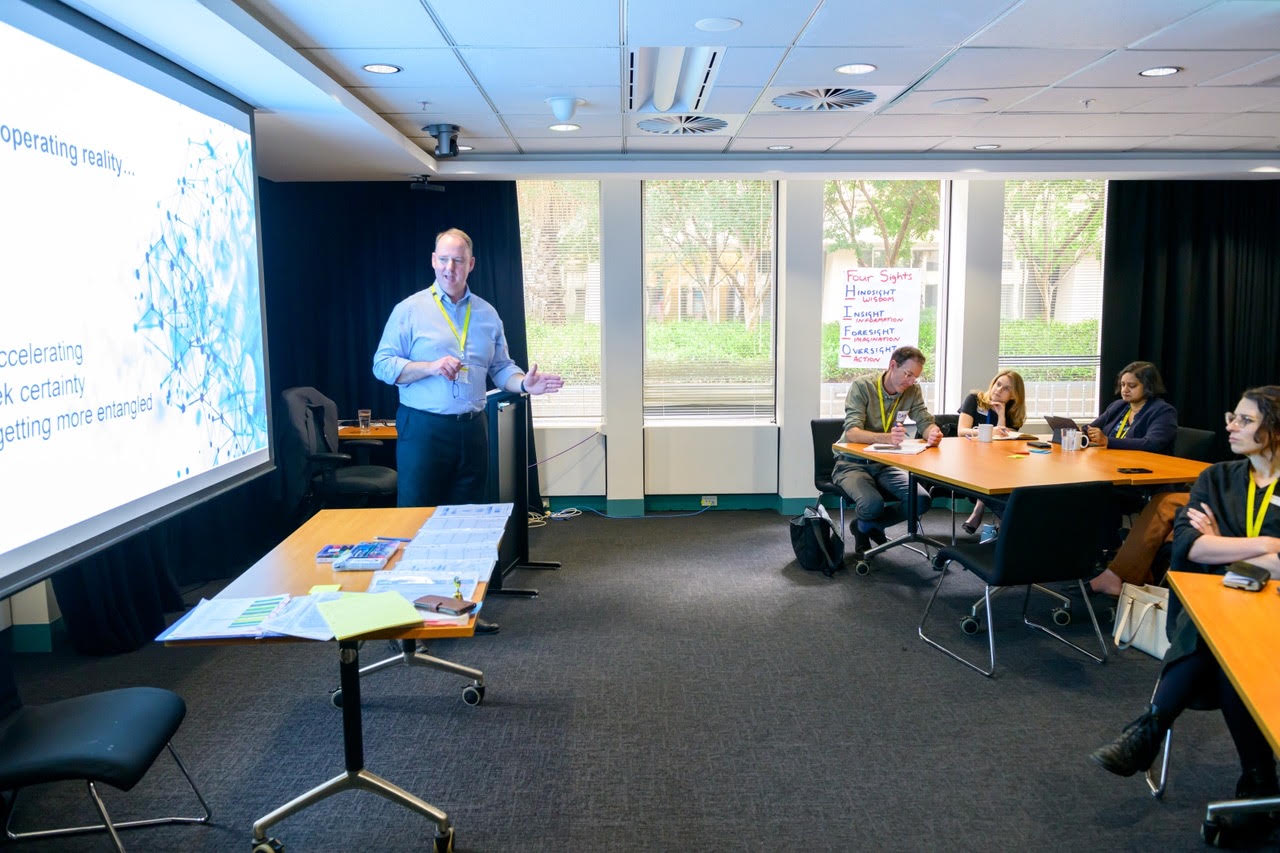
  • Rob Warner speaking at a lectern at a Victorian Department of Treasury and Finance session
    Foresight and regulatory systems, Victorian Department of Treasury and Finance.
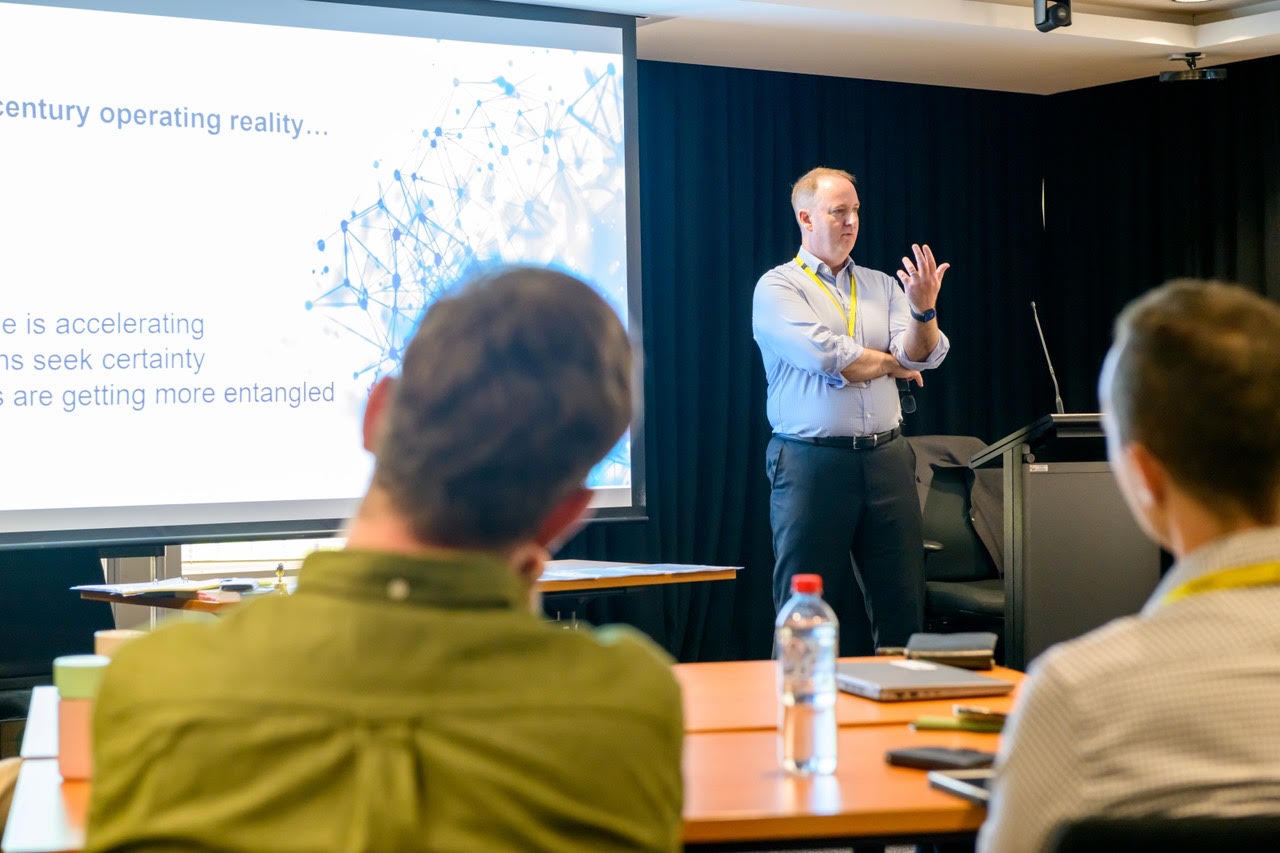
  • Rob Warner leading a regulators workshop with participants seated at tables
    Regulators workshop, working the four sights on live cases.
  • Rob Warner in a workshop room beside a wall chart of the four sights
    The four sights on the wall, mid-session.

Selected thinking

Published work.

Published

  • ANZSOG editorial

    Navigating Regulatory Landscapes: The Four Sights

    The article that sets out the four sights.

    Warner and Pink. Published through ANZSOG, 2023.

    Read the article
  • Peer-reviewed journal article

    Regulated Experience (Rx): Describing it, Distinguishing it, Defining it

    What regulation feels like from the receiving end, and why that experience decides compliance long before enforcement does.

    Warner and Pink. Policy Quarterly, volume 21, issue 4, November 2025, pages 90 to 99. Published by Victoria University of Wellington.

    Read the paper
  • ANZSOG editorial

    Regulatory Diplomacy: The Practitioner's Path to Agility and Foresight

    For agencies whose harm crosses a border and whose counterpart sits in another jurisdiction. How regulators build the standing relationships that let them anticipate together.

    Read the article
  • ANZSOG editorial

    Uncertainty-based regulation

    How an agency builds capability for conditions that will not hold still: recognising them, responding, and readying for the next turn.

    Read the article

From the practice

  • Video

    The primer

    Two minutes on reading the water you are in.

    Watch the primer
  • Short pieces

    In preparation.

    Short notes from the practice on what regulators find when the usual pattern stops working. The first will be posted shortly.

Collaborators

Work done with others.

  • RECAP Consultants logo

    Dr Grant Pink

    RECAP Consultants

    Regulatory practice, capability and evaluation across Australia and internationally. Grant and I deliver seminars, webinars and applied work together, including Rx.

    recapconsultants.com.au
  • With Purpose logo

    Adam Beaumont

    With Purpose

    Work with leadership teams on direction and culture. Together we look at how organisations hold a course while the conditions keep moving.

    withpurpose.solutions

HIFO and Rx are Fathom Practice work developed with Dr Grant Pink, RECAP Consultants. Cynefin® and Estuarine mapping are the intellectual property of Dave Snowden and The Cynefin Co. Fathom Practice applies that work and does not claim it.

How it starts

Three steps to a signed scope.

  1. Write

    An email with a few lines about the situation you are holding. I answer myself, usually within two working days.

  2. Sound it

    A short conversation, without charge, to work out what kind of problem this is and whether I can be useful to it.

  3. Scope it

    A written scope with the work, the dates and a fixed price.

If the regime is settled and performing, I will say so.

Get in touch

Write to me.

If you would rather watch than read, the primer is here.

Pick one regime. Send me three lines about what is not sitting right. I answer myself, usually within two working days, and I will tell you if it does not need me.

rob@fathompractice.com+64 21 275 3340
PO Box 5311
Wellington 6140
Aotearoa New Zealand
LinkedIn

Regulation means holding constraints steady while conditions move. Regulators cannot govern for a future. We steward our way through uncertain futures, and the work is to leave a trace while doing it.

I work with Australian agencies regularly and travel for the sessions that need to be in the room. Invoicing in New Zealand or Australian dollars, GST registered in New Zealand. Comfortable with your agency's procurement and probity requirements.

Certified Foresight Practitioner, The Futures School.

Certified Foresight Practitioner

The Futures School. Foresight practice certified against an international standard.