Skip to content

Fathom Practice

Sound judgement in deep water.

Fathom Practice helps regulators and public bodies see what lies beneath the surface, and act well when the situation is complex and the stakes are high.

Wellington, New Zealand. Working across New Zealand and Australia.

The Practice

Five ways in.

Most engagements combine a few of these. All of them start with the problem you actually have.

HIFO

Temporal intelligence for regulating under uncertainty. An honest read on where your attention actually goes across hindsight, insight, foresight and oversight, and what the thin parts are costing you. Developed with Dr Grant Pink and published in Policy Quarterly.

Applied foresight

Reading what is forming while there is still time to act on it. Horizon scanning and scenario work built to change a decision.

Sense-making and regulatory innovation

Working out what is genuinely going on in a complex and uncertain operating environment, and what is worth trying next. Grounded in Cynefin practice.

Regulatory strategy

Coherent outcomes, with next right moves aligned behind them. Strategy that survives contact with a constrained budget and a select committee.

Rx, the Regulated Experience

What a regime feels like from the outside, where compliance is actually decided. Developed with Dr Grant Pink.

The Approach

Built alongside your team.

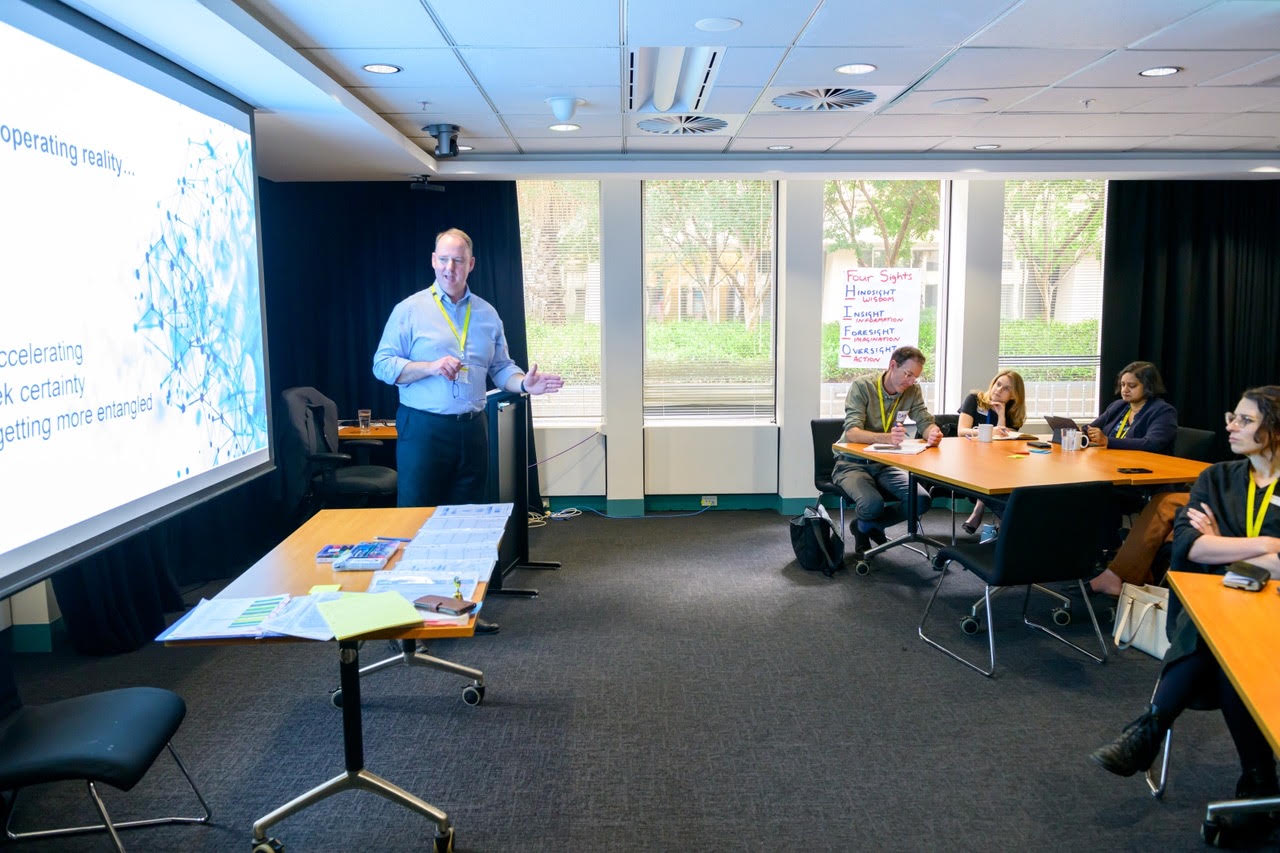
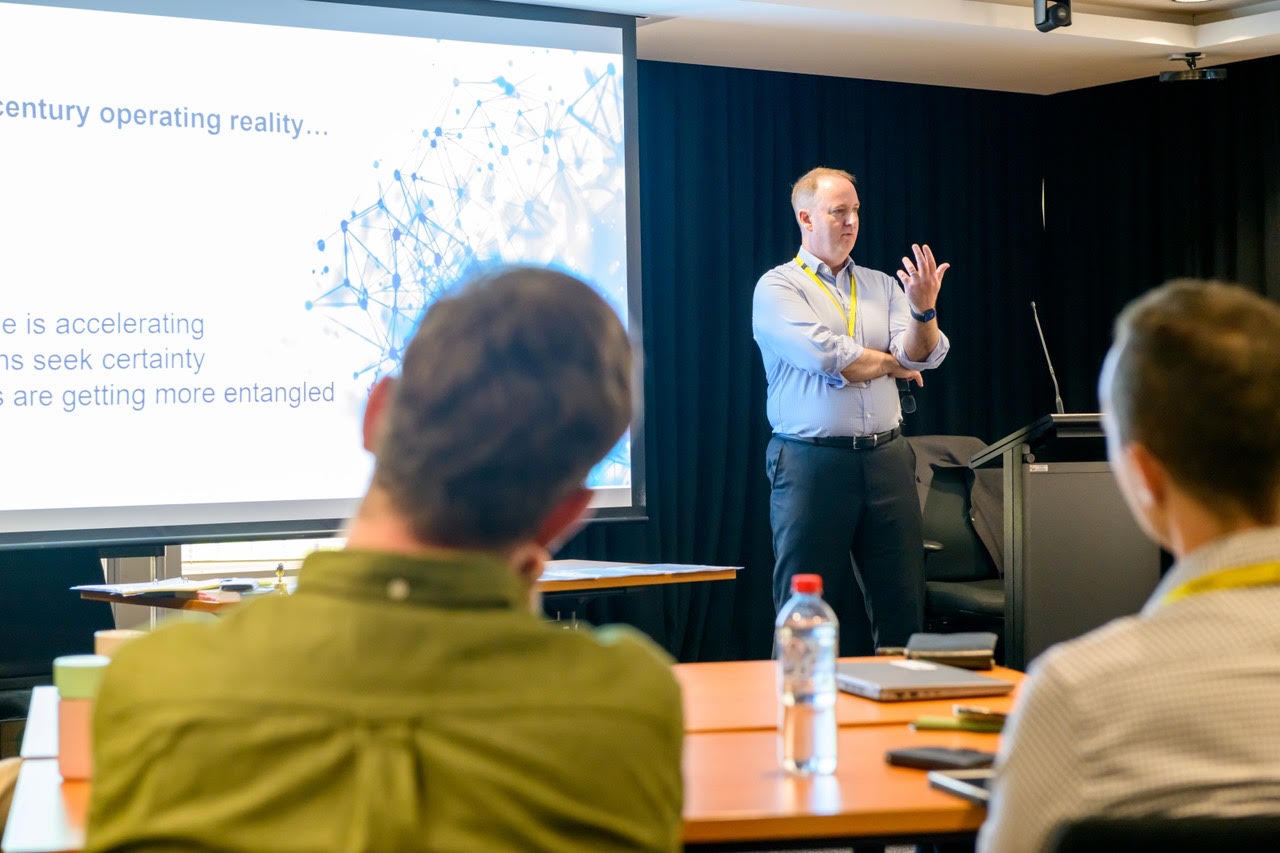
The work happens inside your context, with your people, on your live problems. Workshops, not lectures. Drafting alongside the team that will own the result.

The aim is anticipatory, agile and adaptive capability that stays with the agency long after the engagement ends.

  • Anticipatory

    Reading what is coming while there is still room to move.

  • Agile

    Mobilising and redeploying without waiting for the next cycle.

  • Adaptive

    Changing practice as the ground changes, on purpose.

The frame

Best practice is a gift in the shallows, and a trap in the deep.

The first decision

The first regulatory decision is not what to do. It is what kind of situation this actually is.

Take a sounding

Five kinds of water

  • Aporetic

    Decompose, assign

    The fog. We cannot yet tell what kind of problem this is.

  • Clear

    Sense, categorise, respond

    The shallows. Routine compliance. Best practice works.

  • Complicated

    Sense, analyse, respond

    Deep, but charted by instrument. Knowable with expertise.

  • Complex

    Probe, sense, respond

    Deep water. Novel harms. Probe, do not prescribe.

  • Chaotic

    Act, sense, respond

    The storm. Crisis. Stabilise first, analyse later.

Situations do not stay still

How regulatory problems move

  1. Enter

    Fog lifts

  2. Emerge

    Novelty in the deep

  3. Mature

    Expertise forms

  4. Settle

    Into the charts

The catastrophic fold

The cliff: clear to chaotic

What looks stable can collapse when a shock hits and the old certainties fail.

Pattern entrainment

The trap: yesterday's best practice

Rules built for the old world ossify. The map no longer matches the water.

The question is not only which situation we are regulating. It is how it is moving, and what we should do before we push it too far.

Where change is possible

Shift the system, don't chase the target

  • Counter-factualFixed for now

    Statute, mandate, machinery of government. Work with it.

  • LiminalMovable, not by you alone

    Funding, ministerial appetite, industry norms. Your real leverage.

  • VolatileMoves too easily

    Sentiment, one loud voice. A warning, not a win.

The move

Change the constraints so that good conduct becomes the easy, likely path.

From reading to acting

The Fathom move

  • Frame

    Which water is this, and do we agree before we act?

  • Anticipate

    Look for how it will move.

  • Translate

    Turn complexity into decisions people can act on.

  • Hold

    Carry uncertainty without collapsing it too soon.

  • Orient

    Match the response to the domain, not to habit.

  • Move

    Act, then keep taking soundings.

About

Rob Warner

Rob has spent more than thirty years in the New Zealand public sector, the last ten at Maritime New Zealand, most recently as Chief Advisor. He is a regulatory pracademic, part practitioner and part scholar.

He is a guest faculty member at the Australia and New Zealand School of Government (ANZSOG), and collaborates with the Institute of Regulation (UK) and the ANZSOG National Regulators Community of Practice. He is a Cynefin practitioner, an Oxford-trained scenario planner through the Oxford Scenarios Programme, and a NeuroLeadership-trained coach.

He has delivered seminars and webinars on regulatory practice across New Zealand, Australia and internationally, both on his own and with Dr Grant Pink.

He is interested in resilient decision making, and in the judgement that good regulation asks of the people who carry it.

Selected thinking

Published work.

  • The Four Sights

    Hindsight, insight, foresight and oversight, and why regulators need all four. Warner and Pink, ANZSOG.

    Read it
  • Uncertainty-based regulation (UB-R)

    Recognising, responding and readying: building regulatory capability for conditions that will not hold still. Warner and Pink, ANZSOG.

    Read it
  • The Regulated Experience

    What regulation feels like from the receiving end. Warner and Pink, Policy Quarterly.

    Read it
Rob Warner, Fathom Practice

Get in touch.

If you are holding a mandate the future will not sit still for, write to Rob.

rob@fathompractice.com

+64 21 275 3340

LinkedIn